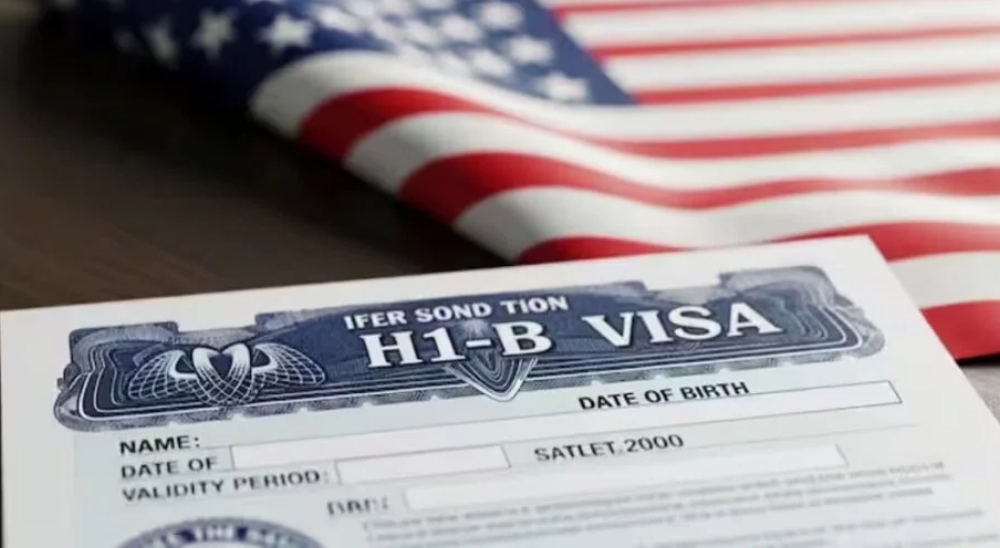
Why the H1B Visa is No Longer the Norm: Exploring Better Options for Continuing Employment in the U.S.

Why the H1B Visa is No Longer the Norm: Exploring Better Options for Continuing Employment in the U.S.

The H1B visa has long been the go-to temporary work visa for international professionals and students seeking employment in the United States. However, over the past decade, the demand for H1B visas has consistently outpaced supply, leading to annual caps being reached within days, if not hours, of the application window opening. This trend underscores a critical shift: the H1B visa is no longer the reliable path it once was for securing employment in the U.S.


📉 The Shifting Landscape of H1B Visa Availability

Data from the U.S. Citizenship and Immigration Services (USCIS) shows a stark change in the availability of H1B visas over the years. In the early 2000s, the cap for H1B visas was often sufficient, with openings lasting several months. However, as the graph illustrating H1B cap reach dates from FY 2004 to FY 2025 shows, the demand has grown exponentially. For instance:

  • In FY 2006, the cap was reached on August 10, 2005.
  • By FY 2008, the cap was reached in just two days, on April 3, 2007.
  • In recent years, the cap has been consistently reached in March, even before the fiscal year begins in April.

The introduction of the H1B electronic registration process in FY 2021 further highlighted this surge in demand. With this system, employers submit basic applicant information electronically, rather than a full petition, yet the cap is still met swiftly each year, often leading to a lottery due to the over subscription.

🚧 Why H1B is No Longer a Guaranteed Path

The shift from a first-come, first-served model to a lottery system reflects the growing imbalance between demand and availability. For example, in FY 2024, the USCIS received 780,884 registrations but could only issue 85,000 visas. This discrepancy illustrates the increasingly competitive nature of the H1B process, making it less dependable for those looking to continue their employment in the U.S.

Moreover, the recent trends indicate that not only are the odds of securing an H1B decreasing, but the rules and selection criteria are also evolving, adding another layer of uncertainty. For FY 2025, USCIS changed the lottery selection criteria to consider the applicant’s unique passport number, which led to a notable drop in the number of registrations. Additionally, the number of eligible H1B registrations with only one employer filing for an applicant has been increasing each year, reaching its highest in 2025 with 423,028 registrations.


🚀 Exploring Alternative Options: Highlighting the O-1 Visa

Given the high demand and low success rates of the H1B lottery, the O-1 visa stands out as a compelling alternative. The O-1 visa is specifically designed for individuals who demonstrate extraordinary ability in their field, whether in sciences, arts, education, business, or athletics. Unlike the H1B, the O-1 visa has no annual cap, providing a more stable and flexible option for professionals who meet the eligibility criteria.

🌟 Key advantages of the O-1 visa include:

  • No Cap Limitations: There is no numerical cap, which means qualified individuals can apply at any time without the pressure of a lottery system.
  • Recognition of Excellence: The O-1 visa is tailored for individuals who have achieved a high level of distinction in their field, which can be demonstrated through awards, publications, leadership roles, and other significant accomplishments.
  • Flexibility in Employment: The O-1 visa offers more flexibility compared to the H1B, allowing for changes in employers, provided the new position still falls within the scope of the individual’s extraordinary abilities.
  • Potential for Extensions: The O-1 visa can be extended indefinitely in one-year increments, making it a long-term solution for those who qualify.

For those who can demonstrate extraordinary ability, the O-1 visa not only provides a path to continue working in the U.S. but also positions individuals as leaders in their respective fields, opening doors to new professional opportunities.


🛠️ How Jinee Green Card Can Help You Secure an O-1 Visa

Navigating the path to an O-1 visa can be complex, but that’s where Jinee Green Card comes in! 🎯 We specialize in building your profile to meet the O-1 visa requirements, helping you showcase your extraordinary abilities and achievements. Our team works closely with clients to guide them through the process, from assembling the right documentation to crafting a compelling narrative that stands out.

👉 Ready to explore the O-1 visa path? Visit us at Jinee Green Card to get started!

Why O1A Should Be Your Preferred Path Over the H1B Lottery and Day 1 CPT

Why O1A Should Be Your Preferred Path Over the H1B Lottery and Day 1 CPT

Stuck in the H1B Lottery Cycle? There’s a Better Way! If you’ve exhausted your H1B lottery attempts and are now considering Day 1 CPT just to stay employed in the U.S., it’s time to rethink your options. Is Day 1 CPT really worth the time, money, and uncertainty? 🤔

😫 The H1B and Day 1 CPT Dilemma 😫

For many professionals, missing out on all three H1B lottery attempts feels like hitting a dead end, leading them to Day 1 CPT as a last resort. But let’s be honest: Day 1 CPT is a risky, costly option with no clear path to a green card, forcing you into continuous enrollment in a degree program. 📉💸

🌟 O1A: The Smarter, More Strategic Alternative 🌟

Rather than pouring resources into Day 1 CPT, consider starting your journey towards an O1A visa after your first missed H1B attempt. 🎯 The O1A is designed for individuals with extraordinary abilities and provides a more straightforward route to working in the U.S. without the lottery hassle or the uncertainty of Day 1 CPT. 🚀

📈 Freedom and Flexibility with O1A 📈

Here’s the best part: If you eventually get selected for H1B, great! Keep building your profile, and you might even bypass the O1A to go straight to the EB1A category, which follows a similar preparation strategy. O1A offers the flexibility to keep advancing your career without being tied down by Day 1 CPT or the H1B lottery process. 🌐💼

👥 Let Jinee Green Card Help You Succeed 👥

At Jinee Green Card, we don’t just focus on one visa—we help you build a strong profile that supports both O1A and EB1A applications, saving you time, money, and stress. Our comprehensive approach ensures your long-term immigration success, not just a quick fix. 🌟

🔗 Ready to Choose a Better Path? 🔗

Visit https://jineegreencard.com today and discover how we can help you build a stellar profile for O1A or EB1A. Take control of your future and break free from the H1B lottery cycle—start now! 🚀🔑

👉 Make O1A your preferred path—because your career deserves more than a lottery! 🌟📊

EB-1A Approval Spotlight: Software Developer in Retail Technology

EB-1A Approval Spotlight: Software Developer in Retail Technology

One of our clients, a Software Developer working in the U.S. retail technology space, just secured an EB-1A Extraordinary Ability Green Card.

And here’s what makes this approval stand out:

👉 No research papers.👉 No PhD.👉 No global awards.

Yet, approved.

So how did this case succeed?

The Real Reason This Case Was Approved

Instead of chasing every possible EB-1A criterion out of fear, we built a focused, defensible strategy around just three deeply connected criteria — executed with precision.

This was not about volume.It was about translation, positioning, and evidence.

The 3 EB-1A Criteria That Carried the Case

1️⃣ High Salary (Elite Market Positioning)

The client earned 65%+ higher compensation than peers in comparable software roles.

But we didn’t rely on payslips alone.

We demonstrated:

  • Role-specific salary benchmarking
  • Peer comparisons within retail-tech and AI-enabled engineering roles
  • Internal expert letters confirming that his compensation reflected scarcity of skills and mission-critical responsibility

📌 USCIS doesn’t ask: “Is the salary high?”

📌 They ask: “Does this salary prove rarity?”

2️⃣ Critical Role in a Distinguished Retail Enterprise

This client wasn’t “just another engineer.”

He held a critical, decision-driving role at a large enterprise retail organization, where he:

  • Built and scaled AI-powered systems
  • Designed architectures impacting millions of end users
  • Influenced core product and operational workflows

Much of this work originally lived inside:

  • Team-based enterprise projects
  • Internal systems
  • Undocumented implementation layers

Our job was to reframe his role from contributor to indispensable architect — and document where the business depended on his technical judgment and leadership decisions.

🏢 Enterprise work doesn’t weaken EB-1A cases  undocumented enterprise work does.

3️⃣ Original Contributions of Major Significance

This is where the case was won.

Instead of patents or academic novelty, we proved real-world adoption and measurable impact.

His product and system innovations:

  • Delivered multi-million-dollar operational savings
  • Improved scalability and system efficiency
  • Enhanced customer and user experience across retail platforms
  • Were adopted across teams and workflows beyond a single project

Unlike shelf patents, his work was actively used and scaled.

📌 USCIS values contributions that matter — not ideas that sit idle.

Strategic Reinforcement: Trade Articles & Thought Leadership

To strengthen peer recognition and field-level influence, we strategically incorporated trade articles and industry visibility.

The client:

  • Was featured in industry-relevant trade publications and tech platforms discussing large-scale retail systems, AI-driven engineering, and enterprise innovation
  • Contributed insights that were consumed by professionals in the same field, not the general public
  • Demonstrated that his work and viewpoints were referenced and valued within the industry ecosystem

📌 Trade articles don’t need to be Forbes or Nature.

📌 They need to show industry relevance, professional readership, and subject-matter authority.

Strategic Reinforcement: Speaking & Knowledge-Sharing Roles

We also positioned speaking and evaluation activities as evidence of peer recognition, not as standalone achievements.

This included:

  • Speaking engagements (internal, semi-public, or industry-facing) where he shared expertise on retail tech architecture, AI systems, and scalability challenges
  • Invitations to evaluate or guide technical work, reinforcing that others in the field sought his judgment
  • Knowledge-sharing roles that showed trusted authority, not just participation

📌 Speaking doesn’t have to be on a global stage.

📌 It must show that others listen because of your expertise.

Bonus (Supportive, Not Core)

To reinforce the narrative, we also included:

  • Select judging and evaluation activities
  • Targeted open-source contributions

These supported the case but they were not the foundation of approval.

What This Case Proves About EB-1A

At Jinee, we tell clients one simple truth:

You don’t need to tick 6 boxes out of fear.

People chase six criteria just to feel safe.But EB-1A approvals aren’t about how many criteria you attempt 

👉 They’re about how well your selected criteria connect

👉 And whether they carry one coherent excellence story

Think of EB-1A Like Applying to Harvard

You don’t need:

  • 20 clubs
  • 100 medals
  • Perfect scores

You need:✔ A focused profile✔ Clear excellence✔ Evidence that you’re already elite — and still rising

EB-1A works the same way.

Who This Case Is For

If you’re in:

  • Software Engineering
  • Product or Platform Engineering
  • Data, AI, or ML
  • Retail Tech, SaaS, or Enterprise Systems

…and you’ve built real, measurable impact,

👉 You may already qualify for EB-1A  even if you think you don’t.

Start Your Free EB-1A Eligibility Check

🧭 No hype🧭 No copy-paste petitions🧭 Just strategy-led approvals

📩 Email: support@jineegreencard.com

 Team JineeExtraordinary Ability. Executed Strategically.

O-1A Approval Spotlight: Scaling Password less Authentication for Global Platforms

O-1A Approval Spotlight: Scaling Password less Authentication for Global Platforms

One of our clients  a Secure Mobile Identity Architect who shipped password less, FIDO2-first authentication at true internet scale  just secured an O-1A approval.

Here’s the real reason this case won.

The Real Reason This Case Was Approved

We didn’t pile on every possible O-1A criterion. Instead we built a tight, defensible strategy around four deeply connected evidence pillars and told one coherent excellence story: technical rarity + measurable, platform-level impact + industry recognition.

This was not about volume. It was about translation, positioning, and evidence.

The 4 O-1A Criteria That Carried the Case

1️⃣ Critical / Leading Role at Distinguished Organizations

The beneficiary was positioned not as “an engineer” but as a primary architect for authentication pipelines used by hundreds of millions  up to billions  of users.

We proved this with:

  • Detailed support letters from senior engineering/security leaders.
  • Documentation showing ownership of passkey rollouts, verification pipelines, and threat-mitigation architecture.
  • Evidence the systems were mission-critical to daily operations and hard to replace.

USCIS cares whether the role was essential not the job title.

2️⃣ Original Contributions of Major Significance

This is where the case was won.

We tied the beneficiary’s work to measurable, organization-scale outcomes:

  • 37% reduction in successful account takeovers after passkey and hardening rollouts.
  • Login verification latency cut from ~4.2s → 1.8s.
  • Hybrid flows handling 50M+ login attempts/day.
  • Patent-pending “progressive auth orchestration” pattern.

These were documented in internal dashboards, A/B test reports, design reviews, and expert letters that explained why the contributions mattered beyond a single team or product.

USCIS values real adoption and impact  not concepts that sit on a shelf.

3️⃣ Authorship: Technical Papers, Internal White Papers & Trade Articles

We framed technical writing  internal architecture docs + trade posts  as professional scholarship:

  • Internal white papers that became reference standards across teams.
  • Externally-published trade pieces and conference-style writeups on passkey migrations and large-scale MFA orchestration.
  • Evidence of readership, citations, and internal adoption metrics.

Authors who shape how practitioners build systems are treated as recognized experts.

4️⃣ Published Material / Media Recognition About the Work

We included verifiable external coverage and company engineering blogs that acknowledged the beneficiary’s role in platform-level changes:

  • Engineering blog posts and industry write-ups describing passwordless initiatives.
  • Independent mentions of platform moves toward passkeys and their security impact.
  • Letters tying published coverage directly to the beneficiary’s contributions.

Independent acknowledgment that links the subject to the contribution reinforces credibility.

Strategic Reinforcements (How the Pieces Connected)

  • Technical metrics (fraud reduction, latency, conversions) were front-and-center  numbers translated technical work into economic and product impact.
  • Expert letters explained technical novelty and replaceability, tying outcomes to the beneficiary’s individual role.
  • Niche scarcity: we framed the skillset (FIDO2 passkeys + Android security + behavioral fraud detection at Big-Tech scale) as top-1% globally — a small talent pool (<~500 engineers) who shipped passkeys at 100M+ scale.
  • Commercial relevance: banking passkey migrations, national digital ID, wearable auth, and on-device anti-phishing roadmap showed future-facing value.

Bonus (Supportive, Not Core)

To round the narrative we added:

  • Patent-pending inventions (supportive evidence).
  • FIDO Alliance training / certifications and internal training contributions.
  • Internal and external speaking or conference contributions, used as supporting recognition rather than primary proof.

What This Case Proves About O-1A

You don’t need to check every box. Strong cases are built by:

  • Choosing a narrow, high-value niche.
  • Quantifying outcomes that matter to organizations and industries.
  • Showing adoptability, scale, and independent acknowledgment.
  • Connecting technical rarity to economic/policy impact.

Think of O-1A like a surgical strike precise, evidence-led, and impossible to ignore.

Who This Case Is For

If you’re in:

  • Mobile authentication, identity, or fraud prevention
  • Security engineering at scale (messaging, social, fintech)
  • Architects working on passkeys, WebAuthn, device-bound keys, or national digital ID

…and you’ve shipped measurable improvements at scale, you may already be a strong O-1A candidate  even if you don’t have patents or academic papers.

Key Takeaways (Reuseable Playbook)

  • Define a tight niche where the client is clearly top-tier.
  • Quantify everything: fraud reduction, latency gains, conversion lifts, scale.
  • Build depth on 3–4 criteria  go very deep; avoid filler.
  • Translate technical outcomes to economic/policy impact.

Result & Next Steps

Outcome: O-1A petition approved.

If you want to see how this strategy maps to your profile, we can:

  • Run a focused O-1A eligibility review, or
  • Walk you through the evidence map used in this petition.

📩 Email: support@jineegreencard.com

— Team Jinee

Extraordinary Ability. Executed Strategically.

O-1 Approval Spotlight: Secure Mobile Identity Architect at Meta

O-1 Approval Spotlight: Secure Mobile Identity Architect at Meta

One of our clients — a Secure Mobile Identity Architect working at Meta — just secured an O-1 visa. Here’s the real reason this case won, and how we built a compact, defensible strategy that translated technical leadership into immigration success.


The Real Reason This Case Was Approved

We didn’t chase every possible O-1 box. We built a focused narrative that linked the beneficiary’s role at Meta, demonstrable technical impact, employer-level recognition, and field influence — then proved each link with high-quality evidence.

This was not about volume.It was about translation, positioning, and compelling documentation.

The 4 O-1 Elements That Carried the Case

1️⃣ Critical / Leading Role at a Distinguished Organization (Meta)

Meta is intrinsically authoritative. We framed the beneficiary as a primary architect for passwordless and mobile identity systems within Meta’s authentication or platform team, showing:

  • Ownership of design & rollout decisions for passkey and multi-factor flows.
  • Evidence the work was mission-critical to product integrity and user safety.
  • Senior engineering/security letters describing strategic dependence on the beneficiary’s expertise and the difficulty of replacement.

Key idea: it’s not the employer name alone — it’s the decision-making authority and organizational dependency that matters.

2️⃣ Original Contributions with Measurable Impact

We tied the beneficiary’s technical innovations directly to platform outcomes and risk reduction:

  • Passkey-first rollouts and hybrid fallback flows that materially reduced account compromise and reliance on SMS OTP.
  • Performance/UX gains and improved security posture documented in internal dashboards and post-rollout metrics.
  • Scalable solutions used across products at Meta, showing adoption beyond a single project.

USCIS-equivalent framing: original contributions that drove measurable, organization-level change.

3️⃣ Employer Support & Industry Recognition

Because the beneficiary worked at Meta, we leveraged employer-side credibility strategically:

  • Detailed, technical support letters from senior engineering and security leaders explaining the beneficiary’s role and irreplaceability.
  • Company engineering blog posts, product announcements, or public write-ups referencing the platform changes (linked back to the work).
  • Evidence that major tech employers (Meta, Google, Amazon) recognize O-1 as an appropriate pathway for top talent — strengthening the “extraordinary ability” context.

Why this matters: independent employer-level validation reduces the need for external prestige trophies.

4️⃣ Authorship, Speaking & Field Influence (Trade/Technical Channels)

We framed internal white papers, engineering docs, trade posts, and speaking engagements as professional scholarship and peer influence:

  • Internal architecture docs and playbooks adopted across teams (evidence: wiki circulation, internal review minutes).
  • Trade articles or engineering blog posts on passkey migrations or mobile anti-fraud practices.
  • Speaking slots or internal training sessions where other teams sought the beneficiary’s guidance.

Point: influence among peers and practitioners is treated as evidence of extraordinary ability.

Strategic Reinforcements (How the Pieces Fit)

  • Numbers-first narrative: We converted technical outcomes into quantifiable wins (fraud reduction, latency down, reduction in support costs, etc.) so impact read like business outcomes.
  • Employer letters did the heavy lifting: Senior signatories explained technical uniqueness, replaceability, and strategic significance.
  • Niche scarcity: We positioned the skillset (FIDO2/passkeys + large-scale mobile auth + anti-fraud at Big-Tech scale) as rare and mission-critical.
  • Public & internal footprint: Where external media was light, internal engineering blogs and cross-team adoption demonstrated field influence.

Bonus (Supportive, Not Foundational)

To round out the petition we included:

  • Internal awards, team recognitions, or engineering excellence mentions.
  • Patent filings, or patent-pending architectures (if present) as supportive proof.
  • FIDO Alliance training/certifications and contributions to standards or best-practice guides.
  • Conference talks or invited sessions used as supplemental proof of peer reliance.

What This Case Proves About the O-1 Pathway

  • O-1 is a high-leverage pathway for top technical talent — especially those at major tech platforms.
  • You don’t need a stack of prizes or academic papers if you can show decision authority, measurable impact, and peer/employer recognition.
  • Employer backing from places like Meta dramatically strengthens the narrative when paired with deep technical metrics and expert letters.

(Also: O-1 is often a faster, lottery-free alternative to H-1B — which is why more top employers are comfortable supporting it.)

Who This Case Is For

  • Engineers and architects working on authentication, identity, fraud prevention, or platform security at scale.
  • Technical leaders at major consumer platforms, fintechs, or national-ID projects who can show measurable impact.
  • Candidates with employer willingness to provide detailed, technical support letters.

If you ship measurable authentication/fraud-reduction work at scale, you may already have the raw material for an O-1 case — even without patents or academic publications.

Outcome & Next Steps

Outcome: O-1 petition approved.

If you want to map this strategy to your profile, we can:

  • Run a free eligibility review, or
  • Walk you through the evidence map used in this Meta petition.

👉 Book a free strategy session.📥 Email: support@jineegreencard.com — or reply with your resume.

P.S. Our community members will hear directly from approved clients in next week’s live session. Join us Friday to learn from their journeys.

— Team Jinee

Extraordinary Ability. Executed Strategically.