
EB-1A Approval · Information Security & Resilient Systems
Microsoft PERM Suspended: What One Engineering Manager’s EB-1A Approval Can Teach You
If your green card plan ran through Microsoft’s PERM process, October 8, 2026 probably changed it. That day, the Department of Labor suspended Microsoft and seven other companies from the PERM program.
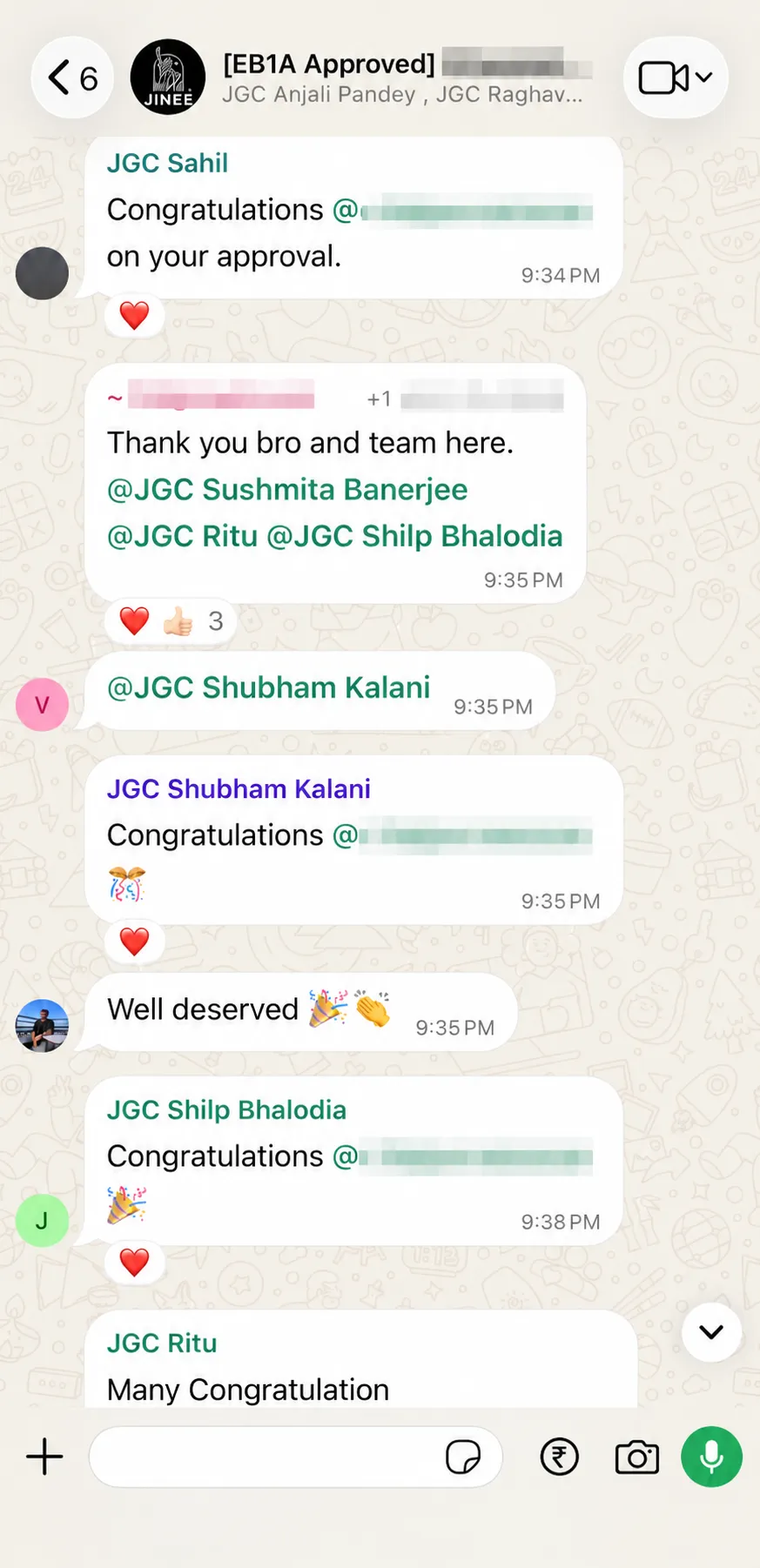
The same week, a Microsoft Principal Engineering Manager we worked with received his EB-1A approval. His case never needed PERM, because he used the EB-1A self-petition route. Below, we use his profile to explain what the suspension means for you, which routes don’t depend on your employer, and how a senior engineer’s internal work can become evidence.
Get a Profile Review
If This Is Your Situation
What the Microsoft PERM Suspension Means for You
On October 8, 2026, the Department of Labor stopped accepting new PERM applications from Microsoft, Adobe, Cognizant, Infosys, TCS, Wipro, HCL and Capgemini, and paused their pending ones. Officials cited alleged misuse of immigration programs. These are allegations, not findings, and Microsoft has disputed them. The scope may change, so check current guidance before making decisions.
| What’s paused | What’s not automatically affected |
|---|---|
| New PERM filings by these employers | Your current H-1B status and work authorization |
| Pending PERM cases at these employers | Green card routes that never needed PERM |
| Employer-sponsored EB-2/EB-3 cases still waiting on PERM | Your own eligibility for a self-petition |
Questions to ask your immigration attorney
- Was my PERM filed, and when? This can affect H-1B extensions beyond six years.
- If I already have an approved I-140, how does the suspension affect it?
- When does my current status expire, and what are my options?
- Could a route that doesn’t need PERM fit my background?
This is general information, not legal advice.
Your Options Beyond Employer PERM
| Route | Who files | Needs PERM? | Good fit if… |
|---|---|---|---|
| EB-1A | You (self-petition) | No | Your work has significant impact and recognition beyond your employer |
| EB-2 NIW | You (self-petition) | No | You have an advanced degree or exceptional ability, and your work benefits the U.S. (EB-1A vs NIW) |
| O-1A (temporary visa) | A U.S. employer or agent | No | You need a work visa option alongside or instead of H-1B |
| Changing employers | New employer | Yes, starting again | A non-suspended employer will sponsor you |
The Starting Profile
Our client is a Principal Engineering Manager at Microsoft, specializing in security and resiliency. Before Microsoft, he held substantial roles at Deloitte.
His expertise spans information security, identity and access management, AI-driven security and resilient distributed systems. His work applies across technology, media, consumer platforms, healthcare and life sciences. That includes protecting access to sensitive information, strengthening infrastructure and developing security approaches for complex environments.
| What he already had | What the petition still needed |
|---|---|
| Substantial experience at Deloitte and Microsoft | A clear explanation of what he personally contributed |
| Strong compensation | Evidence that his work mattered beyond his workplace |
| Meaningful contributions at work | One focused story, not a list of responsibilities |

“Sound familiar? This is one of the most common profiles among senior engineers at large tech companies: strong work, well known inside the company, much less visible outside it.“
— Team Jinee
Step 1: Defining a Clear Professional Focus
Preparation began with one consistent explanation of his expertise:
Improving information security and resiliency across distributed systems, through identity and access management, AI-driven security and infrastructure protection.
That focus connected his Deloitte and Microsoft work and guided which writing and reviewing activities he took on. It gave the petition one professional theme, not a collection of unrelated accomplishments.
What this means for you: Try describing your own expertise in one sentence. If it could describe anyone with your title (“senior engineer with 12 years of experience”), it isn’t focused enough yet.
Step 2: Building Evidence Around the Same Expertise
Each piece of evidence below supports one of the EB-1A criteria.
01

01 — Personal Contributions & Leading Role
At Microsoft, he leads teams working on security solutions, advises on risk and controls, and mentors engineering leaders. We went beyond his team’s achievements to establish what he personally contributed, why it mattered and which records support it.
What this means for you: A title tells a reviewer where you sit, not what you did. Collect records that show your own decisions and designs, not just your team’s results.
02

02 — Recognition and Adoption Beyond His Employer
His work gained support and adoption from other industry leaders. We documented who adopted it, what they used, why it was valuable and how each contribution can be verified.
What this means for you: Ask who outside your company uses or relies on your work, and who could confirm that in an independent letter.
03

03 — Technical Articles
His technical articles focused on the same security and resiliency problems at the center of his profile, explaining them to a broader professional audience.
What this means for you: You don’t need academic papers. Relevant, practical writing in your niche can carry more weight than a scattered publication list.
04

04 — Reviewing and Judging
His activities included internal reviews and external judging opportunities. We documented what he evaluated, the expertise it required and his actual participation, assessing internal and external activities separately.
What this means for you: An invitation alone doesn’t prove judging. Keep records of how you were selected, what you reviewed and that you completed it. See what counts as judging evidence.
“His strongest work was already done. Most of it just lived inside his company. Preparation was about showing what he personally built, and how people beyond his team came to rely on it.”
— Team Jinee
The Result
Common Mistakes Senior Engineers Make
- Waiting for the employer process to resolve. Exploring other routes early costs nothing, and evidence takes time to build.
- Waiting for the employer process to resolve. Exploring other routes early costs nothing, and evidence takes time to build.
- Treating EB-1A as a checklist. Chasing any publication or judging invite creates a scattered profile. Direction comes first.
- Relying only on internal recognition. Evidence from outside your employer carries more weight.
- Assuming a big employer name is enough. Working at Microsoft, earning a high salary or holding a senior title doesn’t make anyone automatically eligible.
- Expecting a fixed timeline. Nine months reflected his strong starting point. Others may need considerably longer. Read what Jinee promises, and what it doesn’t.
-
- Employer sponsorship and personal eligibility are separate questions. One can stop while the other moves forward.
- Internal work can become evidence. But only once you show your personal role and its reach outside your company.
- An I-140 approval is a milestone, not a green card. It doesn’t grant work authorization on its own, and most people keep their current status until the remaining steps are complete. See what happens after the I-140.
- Start with an honest self-assessment:
Who This Case Is For
Engineers, engineering managers and security, identity and infrastructure specialists at Microsoft, Adobe, TCS, Infosys, Cognizant, Wipro, HCL or Capgemini whose green card depended on employer PERM. It’s also for H-1B professionals, especially Indian IT professionals in the green card backlog, whose best work isn’t yet visible outside their company.
Want a Second Opinion on Your Profile?
If you’ve gone through the self-assessment and aren’t sure where you stand, our team can take a look. Email “EB-1A” with your LinkedIn or résumé to support@jineegreencard.com, and we’ll tell you:
✓ Which criteria your current work may already support
✓ What’s missing
✓ Whether EB-1A, NIW or O-1A looks realistic
✓ What profile building over 6–12 months could add
Know a colleague affected by the PERM suspension? Share this article with them. If they enroll with Jinee through your referral, you may qualify for a reward of up to 10% of their program fee, subject to current referral terms and eligibility.
Frequently Asked Questions
Does the Microsoft PERM suspension cancel my H-1B?
No. It concerns PERM labor certification and doesn’t automatically revoke existing H-1B status. Green card steps that depend on a pending PERM case may be delayed.
Can Microsoft employees file an EB-1A self-petition?
Yes, if they personally meet the EB-1A requirements. Eligibility depends on the individual’s record, not the employer.
How long does EB-1A preparation take?
It varies. This client took about nine months, which was faster than usual. Your timeline depends on the evidence you already have.
Is an EB-1A approval the same as a green card?
No. An approved I-140 is a milestone. Visa availability and adjustment of status or consular processing come next.
Disclaimer:
Editorial disclosure: Microsoft is identified solely as the client’s employer. This case study is not sponsored, approved or endorsed by Microsoft. Client information is anonymized. This is general information, not legal advice. Jinee is not a law firm; independent immigration attorneys provide legal advice and handle filings.