
Case Studies
Everything you need to know about self-petition green cards.

Case Studies
Cloud-Native Engineering for Healthcare and Government Platforms
We are sharing an O-1A Extraordinary Ability approval for a software developer whose work focused on building and scaling....

Approval Spotlights
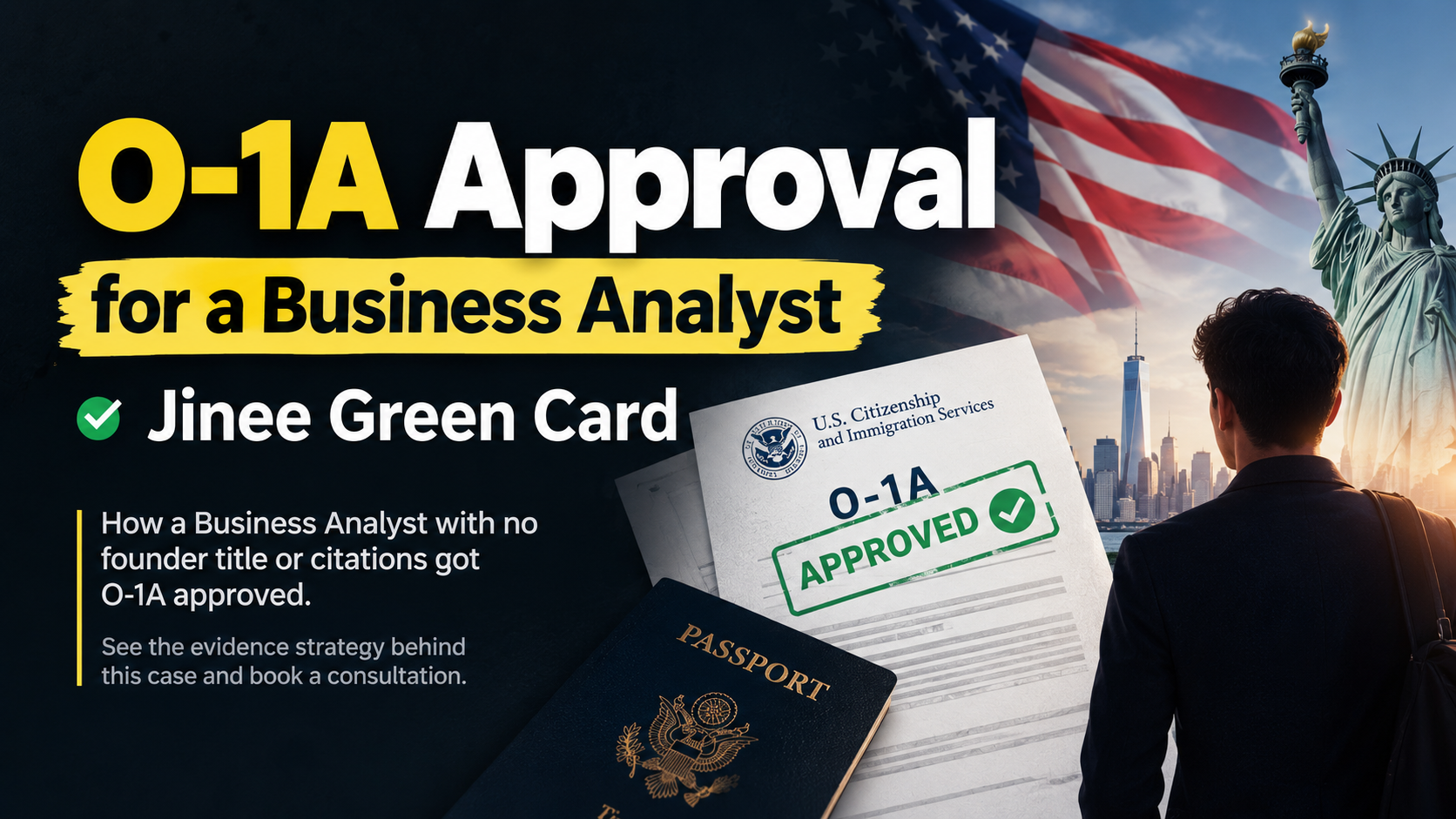
Business Analyst to Recognized Expert in Data-Driven Decision Making

Cloud Engineer to Recognized Authority in Federal Cloud Modernization & Disaster Recovery Engineering

AI-Driven Enterprise Release Engineering & Reliability Architecture

Project Manager to Recognized Expert in Circular Construction

How a Senior Product Leader at Google Turned 8 Years of Experience Into an Extraordinary Ability Strategy

Project Manager to Recognized Expert in Circular Construction

How This Data & AI Professional Built an O-1 Profile Over 12 Months
FIDO2-First Authentication at Scale

Software Developer in Retail Technology.

Engineering Leadership in Water Infrastructure.

How to Build a Strong EB2 NIW Profile Before Filing

What This Really Says About Today’s EB-1A Standard

Senior Insurance-Tech Consultant Extraordinary Ability in Core Platforms, Digital Transformation & AI

Secure Mobile Identity Architect at Meta

Scaling Passwordless Authentication for Global Platforms

Cloud-Native Engineering for Healthcare and Government Platforms
Stop guessing and start building.
Ready to build a profile like these? Start with a quick assessment, and we will help you find the right category and strategy.
Frequently Asked Questions
Are these real green card approvals?
Can I self-petition without a lawyer?
You can. EB-1A, O-1A, and EB-2 NIW all allow self-petitioning. That said, the strength of your evidence and strategy makes the biggest difference.
What is the difference between O-1A requirements and O-1A criteria?
Requirements are the four basic conditions to qualify (extraordinary ability, recognition, a U.S. petitioner, and relevant work). Criteria are the eight evidence categories used to prove your extraordinary ability. You must meet at least three criteria.
Which category is right for me?
It depends on your field, achievements, and goals. As a starting point, EB-1A and O-1A reward top-tier acclaim, while NIW rewards work of national importance.
How long do these cases take to prepare?
Timelines vary by profile. In general, building strong evidence takes a few months, as you will see in the 12-month case below.