
O-1A Approval · Software Engineering
Scaling Passwordless Authentication for Global Platforms
We are sharing an O1A Extraordinary Ability approval for a senior technology leader whose work focused on designing and scaling passwordless authentication systems used by large global platforms.
This case shows how real world technical impact, enterprise adoption, and field level recognition can meet the O1A standard, even without academic publications or patents.
Overview of the O1A Case
Our client works in the specialized area of identity and access management, with a focus on passwordless authentication. As platforms scale and security threats evolve, this area has become increasingly critical. This specialized expertise not only supported a strong O-1A case but also strengthened the foundation for a future employment-based Green Card application.
Instead of relying on job titles or generic engineering responsibilities, the petition focused on:
The originality of the client’s technical contributions
The measurable impact of those contributions in production systems
The reliance of large organizations on the client’s work
The client’s standing among peers working on similar problems
Four pillars of the petition.
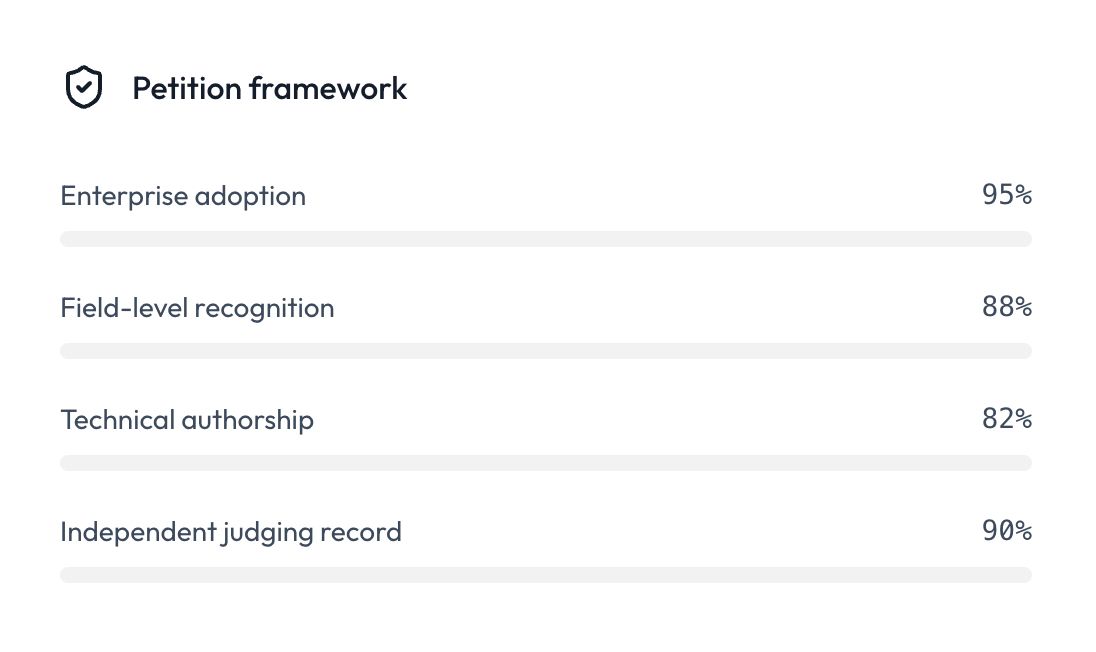
USCIS evaluates eight criteria. Here are the four that carried this approval, each grounded in real, production-level engineering work.
01

Original Contributions of Major Significance
The core of the petition centered on the client’s role in advancing passwordless authentication frameworks that materially improved platform security, reduced credential based attack surfaces, and improved user experience by removing password related friction.
Most importantly, the petition demonstrated how these contributions were implemented, adopted, and relied upon in real production environments. Major significance was established through usage and impact, not theoretical claims.
02

Critical Role for a Distinguished Organization
The client held a trusted and critical role within a distinguished technology organization where authentication was a core dependency rather than a supporting feature.
The petition showed that the client had decision making authority over authentication architecture, responsibility for rollout across teams, and direct accountability for security sensitive systems. USCIS evaluates critical role based on organizational reliance, and the evidence clearly demonstrated that this work could not be easily replaced.
03

High Salary Relative to Others in the Field
Compensation evidence showed that the client’s salary reflected scarcity of expertise in large scale identity systems and strong market demand for professionals capable of leading passwordless authentication initiatives.
This helped reinforce that the client operates at the top end of the field, consistent with O1A standards.
04

Supporting Evidence: Recognition by Experts in the Field
Recognition by experts is not an independent O1A criterion, but it played an important supporting role in this case.
Independent experts confirmed that the client’s work represented a meaningful advancement in authentication practices, that their solutions were relied upon in high stakes production systems, and that their technical judgment influenced how passwordless authentication was implemented at scale.
These expert perspectives helped USCIS understand why the client’s work mattered beyond a single employer.

“O-1A is about impact, not fame. You don’t need public notoriety you need evidence that your work is relied upon and matters.”
— Team Jinee
03 — Takeaways
What you can learn from this O1A Approval
01
Impact over fame
You don’t need notoriety. You need evidence your work is relied upon.
02
Internal work qualifies
Non-public systems can win when usage and criticality are positioned correctly.
03
Letters validate substance
Expert letters should confirm real contributions, not manufacture them.
04
Specialization wins
Cloud-native, HIPAA, DevOps and automation are strong O-1A fits.
High approval rates.
Stronger with strategy.
Outcomes still depend heavily on evidence quality and strategy. Strong cases succeed when they clearly explain why an individual’s work rises above routine professional contributions.
O1 Visa Approval Rates and Why Strategy Matters
While O1 visa approval rates are generally high, outcomes still depend heavily on evidence quality and strategy. Strong cases succeed when they clearly explain why the individual’s work rises above routine professional contributions.
This case demonstrates that a well structured O1A petition grounded in real technical impact and supported by credible expert insight can succeed even without traditional academic credentials.